Source rechargeable noise cancelling wireless microphone for Meeting, Voice, Music
Find 30 options for the rechargeable noise cancelling wireless microphone tailored for professional applications. Buyers can compare models like SM-211 and X3W based on frequency response, battery capacity, and directivity to select the best fit for recording or live events.
Key considerations
Products List


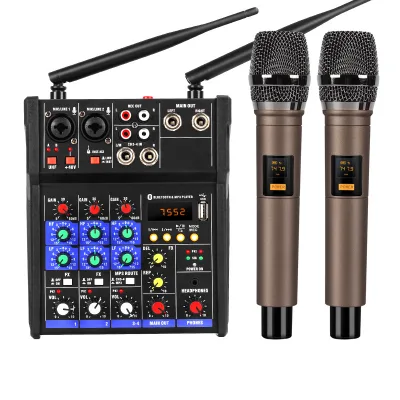
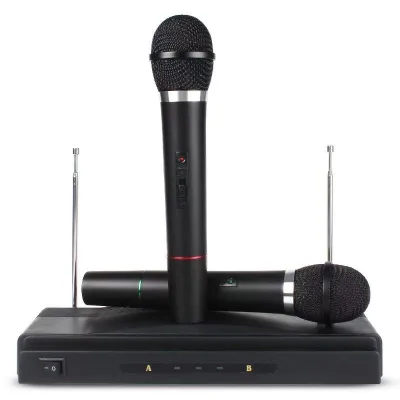
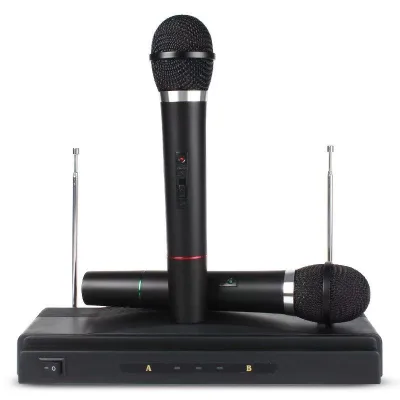
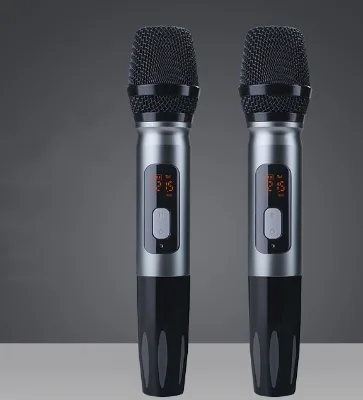
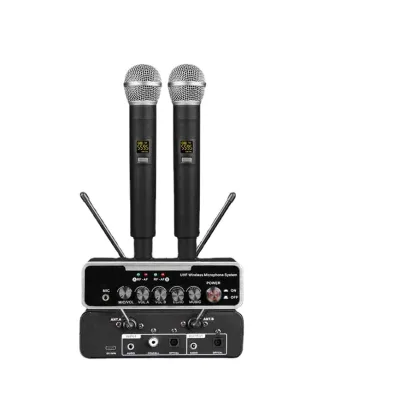
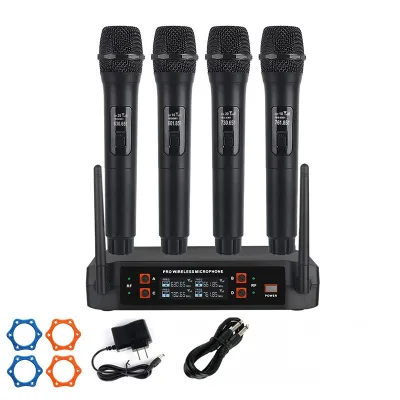


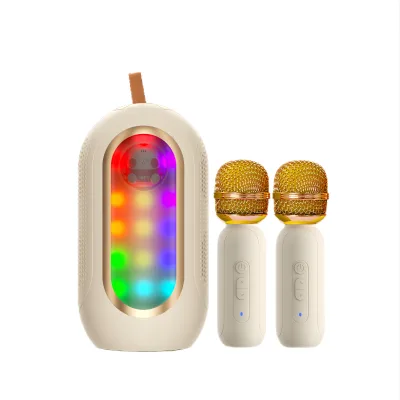


Comprehensive Sourcing Guide
Strategic Sourcing Guide for Rechargeable Noise Cancelling Wireless Microphones
Understanding Technical Specifications and Signal Performance
When sourcing rechargeable noise cancelling wireless microphones, buyers must first distinguish between the various technical configurations available in the current market. The core keyword implies a device that combines wireless transmission with power management and audio clarity features. Based on observed product data, the wireless technology utilized in this category predominantly relies on UHF (Ultra High Frequency) transmission. This frequency band is generally preferred for professional applications due to its ability to penetrate obstacles and maintain a stable signal over distance, which is critical for meeting and recording environments.
The signal transmission method is explicitly wireless, eliminating the need for physical cabling during operation. However, the audio channel configuration varies significantly between models. Some units are designed as mono systems, while others offer stereo capabilities. For applications requiring high-fidelity music recording or complex voice capture, stereo channels provide a wider soundstage. Conversely, mono configurations are often sufficient for speech-heavy environments like meetings or lectures. The directivity of the microphone element is another critical specification. Buyers should verify whether the transducer is uni-directional, which focuses on sound from the front and rejects ambient noise, or omni-directional, which captures sound from all angles. The observed data indicates the presence of both types, with some units featuring a combined type sound field force to adapt to different acoustic environments.
The transducer principle is another area requiring verification. Condenser microphones are frequently cited in this category, offering high sensitivity and a wide frequency response. Specific observed ranges for frequency response extend from 20Hz to 20kHz, covering the full spectrum of human hearing, while other models may start at 70Hz. Sensitivity ratings, which determine how effectively the microphone converts sound pressure into electrical signals, vary, with observed values around -33±3dB and -38±3dB. A higher sensitivity rating generally allows for better performance in quieter environments, but it also increases the risk of picking up background noise if not paired with effective noise cancellation.
| Specification Category | Observed Variations | Procurement Implication |
|---|---|---|
| Wireless Technology | UHF | Ensures stable transmission with less interference. |
| Sound Channel | Mono, Stereo | Mono for speech; Stereo for music/high-fidelity. |
| Directivity | Uni-direction, Omni-direction | Uni-directional for noise rejection; Omni for ambient capture. |
| Frequency Response | 20Hz-20kHz, 70-20kHz | Full range for music; Limited range for voice applications. |
| Transducer Principle | Condenser | High sensitivity and clarity, suitable for professional use. |
| Signal-to-Noise Ratio | ≥95db, -64db | Higher dB values indicate cleaner audio with less hiss. |
Compliance, Certification, and Physical Standards
Compliance and certification are non-negotiable aspects of B2B procurement, particularly for electronic devices intended for commercial or public use. Buyers must verify that the products carry recognized safety and quality certifications. In the observed data, the CCC (China Compulsory Certification) is explicitly mentioned as a standard for certain units. This certification is mandatory for products sold within China and serves as a baseline indicator of electrical safety. However, for international markets, buyers should not assume that CCC alone is sufficient; additional certifications such as CE, FCC, or RoHS may be required depending on the destination country.
Physical standards and packaging also play a role in compliance and logistics. Product dimensions are often listed as standard specifications, with observed examples including 17.3x12x27.7cm, 22.5x13.1x7cm, and 10.2x15.7x5.5cm. These dimensions likely refer to the packaging or the equipment base size, which is crucial for shipping cost calculations and storage planning. The equipment base size, for instance, has been observed at 14.810460mm, which suggests a compact design for gooseneck microphone systems. The rod length for such systems is noted as 400mm, a standard dimension for conference table setups.
Packaging materials are another area of verification. The data indicates that products are shipped in either cartons or boxes. The choice of packaging can impact the protection of the device during transit and the perceived value of the product upon arrival. Buyers should ensure that the packaging includes all necessary accessories, such as charging cables, user manuals, and mounting hardware, to avoid additional procurement costs. The origin of the products is consistently listed as China, with specific manufacturing hubs identified in Shenzhen. While this provides insight into the supply chain, buyers must verify the specific factory location to assess logistics lead times and potential geopolitical risks.
Cost Drivers and Pricing Structures
The pricing landscape for rechargeable noise cancelling wireless microphones is influenced by several key factors, including technical specifications, build quality, and order volume. The observed listed price range spans from $6.50 to $550.00 USD. This wide disparity reflects the diversity of the market, ranging from basic consumer-grade units to professional-grade systems with advanced features. The lower end of the spectrum likely corresponds to simple handheld microphones with basic features, while the higher end includes systems with LCD screens, touch controls, and Hi-Fi capabilities.
Minimum Order Quantity (MOQ) is a significant cost driver in this category. The observed MOQ range is between 1 and 1000 units. A low MOQ of 1 allows buyers to test the product with minimal financial risk, which is ideal for small businesses or proof-of-concept projects. However, larger orders typically benefit from economies of scale, reducing the per-unit cost. Buyers should negotiate based on their projected volume, understanding that the price per unit will likely decrease as the order quantity increases.
Customization is a critical factor that can influence both cost and lead time. The observed data confirms that customization is available for these products. This could include branding, color changes, or specific technical modifications. While customization adds value, it often requires a higher MOQ and a longer lead time. Buyers should clarify the specific customization requirements and associated costs before placing an order. Additionally, the battery capacity is a major cost component. Observed battery capacities range from 350mAh to 800mAh, with usage times of approximately 7 hours. Larger batteries increase the unit cost but provide longer operational life, which is essential for all-day events.
Typical Applications and Usage Scenarios
The versatility of rechargeable noise cancelling wireless microphones makes them suitable for a wide array of applications. The observed data highlights several key use cases, including meetings, voice recording, music performance, and commercial activities. In a meeting context, the microphone's ability to transmit voice clearly while rejecting background noise is paramount. Uni-directional microphones with high signal-to-noise ratios are particularly effective in this scenario. For music and recording applications, the frequency response and sound channel configuration become more critical. Stereo microphones with a full frequency response (20Hz-20kHz) are preferred to capture the nuances of musical instruments and vocals.
Commercial applications, such as retail environments or guided tours, often require durable and portable solutions. The observed "Commercial" application tag suggests that some units are designed for high-traffic environments. These devices may feature robust construction, such as metal speaker materials, and long battery life to ensure continuous operation. The "Activity: Passive" attribute indicates that some systems may not require active power for certain functions, or they may be designed for low-power consumption modes.
The "Use Distance" specification is another critical factor for application suitability. Observed data indicates a barrier-free distance of at least 10 meters. This range is sufficient for most indoor applications, such as conference rooms, classrooms, and small stages. However, for larger venues or outdoor events, buyers should verify if the specific model supports extended ranges or requires additional repeaters. The presence of an LCD screen and touch control features suggests that some models are designed for user-friendly operation in professional settings, allowing for quick adjustments to volume and settings without the need for external software.
Supplier Evaluation and Quality Control
Evaluating suppliers requires a thorough understanding of their capabilities and quality control processes. Given that the products originate from China, specifically Shenzhen, buyers should verify the supplier's manufacturing capacity and quality assurance protocols. The presence of specific model numbers, such as SM-108, SM-211, SM-211-2, X3W, GF13, and SF-777W, indicates a diverse product portfolio. Buyers should request samples of these specific models to assess build quality, audio performance, and battery life.
Quality control should focus on several key areas, including the consistency of the wireless signal, the durability of the battery, and the accuracy of the specifications. Buyers should verify that the THD+N (Total Harmonic Distortion plus Noise) and SNR (Signal-to-Noise Ratio) values match the claimed specifications. Observed values such as -85db for THD+N and ≥95db for SNR suggest high-quality audio performance, but these should be independently verified through testing. Additionally, the physical construction, including the connector type (USB) and the gooseneck rod length, should be inspected for durability and ease of use.
Suppliers should also demonstrate a commitment to continuous improvement and customer support. Buyers should inquire about the warranty period, return policies, and after-sales service. The availability of spare parts, such as batteries and charging cables, is also important for long-term procurement. Finally, buyers should assess the supplier's ability to meet delivery deadlines and handle any logistical challenges that may arise during the shipping process.
Long-Term Procurement Considerations
Long-term procurement strategies for rechargeable noise cancelling wireless microphones should focus on sustainability, scalability, and technological evolution. As battery technology advances, buyers should consider the longevity of the battery and the availability of replacement cells. The observed battery capacities of 350mAh and 800mAh suggest that different models cater to different usage durations, but buyers should plan for the eventual replacement of batteries to maintain operational efficiency.
Scalability is another critical consideration. As the organization grows, the need for additional microphones may increase. Buyers should establish relationships with suppliers who can accommodate larger orders and provide consistent quality over time. The availability of customization options allows organizations to brand the microphones for specific events or departments, enhancing brand visibility and user experience.
Finally, buyers should stay informed about technological advancements in wireless audio. The shift towards UHF technology and the integration of features like LCD screens and touch controls indicate a trend towards more sophisticated and user-friendly devices. By staying ahead of these trends, buyers can ensure that their procurement strategy remains relevant and effective in meeting the evolving needs of their organization. Regular reviews of the product specifications and market trends will help buyers make informed decisions and maintain a competitive edge in their respective fields.
FAQs
What wireless technology do these microphones use?
These microphones predominantly use UHF wireless technology for stable transmission. This frequency band is preferred for professional applications as it penetrates obstacles and maintains a signal over distance in meeting and recording environments.
Can I customize the product branding and design?
Yes, customization is available for these products to meet specific branding needs. Buyers should note that customization often requires a higher minimum order quantity and may extend the lead time for production and delivery.
Which battery capacity options are available for these units?
Observed battery capacities range from 350mAh to 800mAh depending on the model. Units with larger capacities typically offer longer usage times, such as approximately seven hours, which is essential for all-day events.
What certifications are required for these electronic devices?
Some units carry the CCC certification, which is mandatory for products sold within China. Buyers targeting international markets must verify if additional certifications like CE or FCC are required for their specific destination country.
How does the directivity affect noise cancellation performance?
Microphones are available in uni-directional or omni-directional configurations to suit different needs. Uni-directional models focus on sound from the front and reject ambient noise, making them ideal for meetings and voice recording.
What is the typical price range for these microphones?
The listed price range spans from 6.50 to 550 USD depending on features and build quality. Lower prices often correspond to basic handheld units, while higher prices include systems with LCD screens and Hi-Fi capabilities.